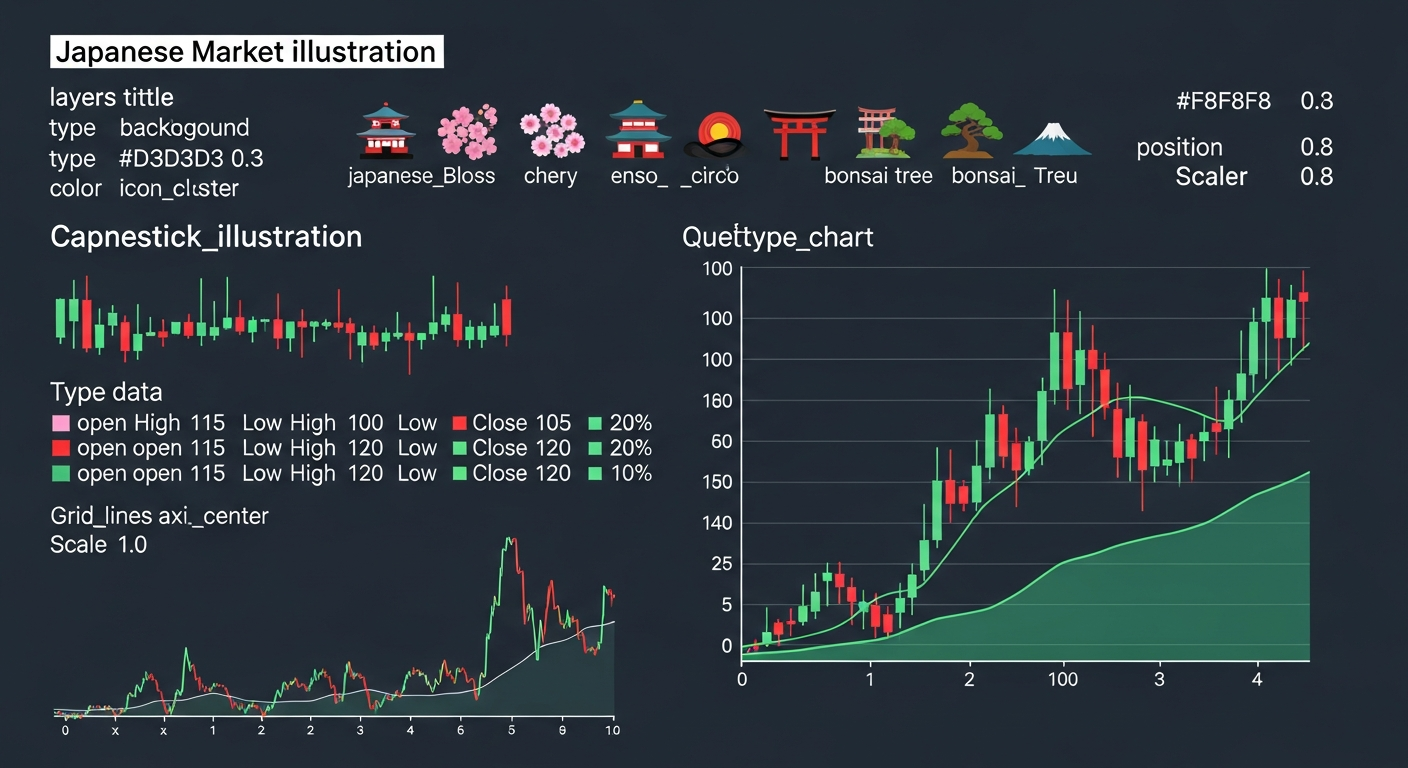
Market Overview: Nikkei 225 Rises as BOJ Rate Hike Signals Policy Normalization – Japan Market Update
Financial markets continue demonstrating the complex interplay of economic fundamentals, policy decisions, and investor sentiment. Current market conditions reflect multiple factors requiring careful analysis for informed perspective. Understanding these dynamics enables appropriate response to market movements.
Market developments deserve context beyond headline numbers. Single-day movements, while attention-grabbing, often reverse or prove insignificant within broader trends. Maintaining longer-term perspective prevents overreaction to normal volatility while remaining alert to genuine trend changes.
Key Market Drivers
Current market conditions reflect several significant factors shaping investor behavior and asset prices. Central bank policies, economic data releases, and geopolitical developments all influence market direction. Understanding these drivers provides framework for interpreting price movements.
Monetary policy remains central to market dynamics as central banks navigate inflation concerns against growth objectives. Interest rate decisions and forward guidance significantly affect asset valuations across classes. Policy trajectory expectations often matter more than current rate levels.
Economic Indicators
Recent economic data provides mixed signals requiring nuanced interpretation. Employment figures, inflation readings, and growth metrics each tell partial stories. Synthesizing multiple indicators reveals economic conditions more accurately than any single measure.
Leading indicators suggest future economic direction while lagging indicators confirm established trends. Understanding which indicators serve which purposes prevents misinterpretation. Markets often react more to surprise versus expectations than to absolute levels.
Sector Performance
Different market sectors respond distinctly to current conditions based on their economic sensitivities. Cyclical sectors typically outperform during growth phases while defensive sectors provide stability during uncertainty. Sector rotation patterns reflect changing economic expectations.
Technology sector performance particularly influences major indices given heavy weightings. Regulatory developments, earnings results, and valuation concerns all affect tech stock movements with outsized index impact. Understanding sector dynamics clarifies index-level movements.
Technical Analysis Perspective
Chart patterns and technical indicators provide additional analytical perspectives beyond fundamental analysis. Support and resistance levels, trend lines, and momentum indicators inform trading decisions for technically-oriented investors. These tools complement fundamental analysis for comprehensive market assessment.
Volume patterns confirm or question price movements, with high-volume moves suggesting stronger conviction than low-volume changes. Divergences between price and volume or momentum indicators sometimes signal potential trend changes. Technical analysis works best combined with fundamental understanding.
Key Levels and Patterns
Current price action establishes important technical levels that may influence future trading. Breakouts above resistance or breakdowns below support often trigger momentum moves. Awareness of these levels helps anticipate potential acceleration points.
Pattern formation on various timeframes suggests possible future directions while acknowledging inherent uncertainty. No technical pattern guarantees outcomes, but probabilistic edges inform positioning decisions. Pattern failures also provide information by revealing unexpected strength or weakness.
Global Market Context
Domestic markets increasingly reflect global developments in interconnected financial systems. International economic conditions, currency movements, and cross-border capital flows all influence domestic asset prices. Monitoring global markets provides essential context for domestic analysis.
Currency relationships affect both direct forex investments and multinational corporate earnings. Dollar strength or weakness significantly impacts commodity prices, emerging market conditions, and export competitiveness. Currency dynamics deserve attention beyond direct forex traders.
Regional Developments
Major global regions present distinct economic conditions affecting worldwide markets. Asian markets, European developments, and emerging market trends each contribute to global financial conditions. Understanding regional dynamics reveals opportunities and risks across global portfolios.
Geopolitical developments increasingly affect market conditions beyond traditional economic factors. Trade policies, international relations, and political stability influence investor confidence and capital flows. These factors defy precise quantification but significantly impact markets.
Investment Implications
Current market conditions suggest several considerations for investment positioning. Risk assessment appropriate to personal circumstances should guide responses to market developments. Neither panic selling during corrections nor aggressive buying during rallies typically produces optimal outcomes.
Diversification remains essential regardless of current market conditions. Concentrated positions magnify both gains and losses, creating unnecessary volatility in portfolio values. Appropriate diversification provides stability enabling rational decision-making during volatile periods.
Risk Management
Position sizing and stop-loss discipline protect portfolios from catastrophic losses. Understanding potential downside before entering positions enables appropriate exposure decisions. Risk management preserves capital for future opportunities when current positions fail.
Cash positions provide both safety and optionality during uncertain conditions. While holding cash sacrifices potential returns, dry powder enables opportunistic buying during corrections. Appropriate cash levels depend on individual circumstances and market assessment.
Long-Term Perspective
Short-term market movements rarely affect long-term investment outcomes for patient investors. Maintaining strategic asset allocations through volatility typically outperforms tactical market timing attempts. Time in market generally beats timing market for most investors.
Regular portfolio review ensures alignment with goals and risk tolerance as circumstances evolve. Rebalancing maintains target allocations as different assets perform differently. Systematic approaches reduce emotional decision-making during volatile periods.
Conclusion
Current market conditions require informed analysis balancing multiple factors and timeframes. Nikkei 225 Rises as BOJ Rate Hike Signals Policy Normalization – Japan Market Update provides context for recent developments while acknowledging inherent uncertainty in market forecasting. Maintaining disciplined approaches appropriate to individual circumstances remains essential.
Markets continuously present both opportunities and risks requiring ongoing attention and adaptation. Stay informed through reliable sources while maintaining perspective on market movements’ significance for personal financial situations. Long-term success comes from consistent application of sound principles rather than prediction of short-term movements.